Wondering whether a historic Telluride home or a newer one is the better fit for your life here? It is a smart question, especially in a town where architecture, preservation, climate, and daily livability all shape the ownership experience. If you are weighing charm against convenience, this guide will help you understand the real tradeoffs so you can buy with more confidence. Let’s dive in.
Why This Choice Matters in Telluride
In Telluride, the difference between historic and modern homes is not just about style. It is tied to how the town has grown, how development is regulated, and how homes perform in a high-altitude mountain climate.
Telluride’s core area was designated a National Historic Landmark District in 1961 because of its importance during the mining boom from 1878 to 1913. That history still shapes what you can do with many older homes today, since exterior work in the historic area often requires review and approval through the town’s Historic and Architectural Review Commission, or HARC.
At the same time, newer homes in Telluride are not designed as a total break from the past. Town guidelines call for newer residential areas to stay visually connected to the older town through scale, materials, setbacks, street orientation, and view protection. So when you hear “modern” in Telluride, it usually means newer, more efficient, and less constrained, not wildly futuristic.
What Defines a Historic Telluride Home
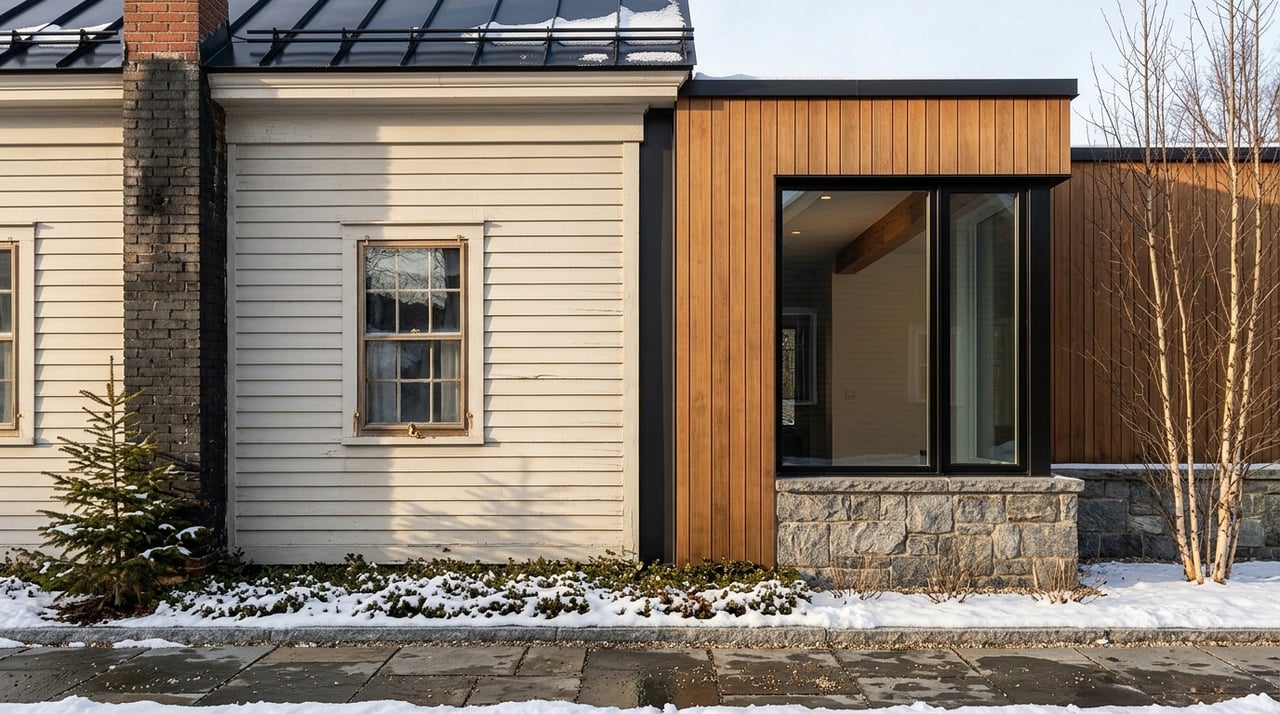
Historic homes in Telluride tend to reflect the town’s mining-era roots. The local design guidelines describe much of this housing stock as vernacular wood-frame construction with wood siding, often in compact forms like L-type, gable-end, and hip-roof houses.
Many of these homes are porch-oriented, vertically scaled, and built on the narrow lot pattern that defines old Telluride. Some include Queen Anne or Gothic Revival influences, but the overall character is usually simple, authentic, and tied closely to the original town grid.
For many buyers, that character is the main attraction. A historic home can offer a stronger sense of place and a direct connection to Telluride’s early built environment that is hard to recreate in newer construction.
Why Buyers Love Historic Homes
The appeal of a historic home often starts with authenticity. These properties tend to sit in the walkable old-town fabric that many buyers picture when they think about living in Telluride.
You may also appreciate the proportions and architectural details that came from a different era. Front porches, narrow lots, modest forms, and original window patterns can make a home feel deeply rooted in the town rather than simply placed there.
For buyers who care about legacy and local identity, that can matter as much as square footage. A historic property often feels like part of Telluride’s story, not just a place to stay.
What to Know About Preservation Rules
Historic character comes with added oversight. In Telluride, HARC issues Certificates of Appropriateness before permits are granted for many types of work, including demolition, moving, renovation, restoration, additions, and exterior alterations.
That means if you buy a historic home and want to make visible changes, you should expect a more structured review process. The town’s standards emphasize preserving original window proportions, limiting new street-facing openings, and using historically compatible details.
Window work is a good example of how thoughtful but specific the rules can be. Town policy favors repair, in-kind replacement, and storm windows, though thermal glass can be used in historic sashes to improve energy performance.
What Upkeep Can Look Like
Owning a historic home often means more maintenance planning. Older materials and construction methods can require specialized repairs, and exterior updates may involve more review and more decision points than they would in a newer house.
That does not make historic ownership a bad choice. It simply means the experience tends to reward buyers who value architectural integrity and are comfortable balancing preservation with practical improvements.
If you live out of town or plan to use the property as a second home, this is worth thinking through early. The right fit depends on how involved you want to be with long-term upkeep and project management.
What Defines a Modern Telluride Home
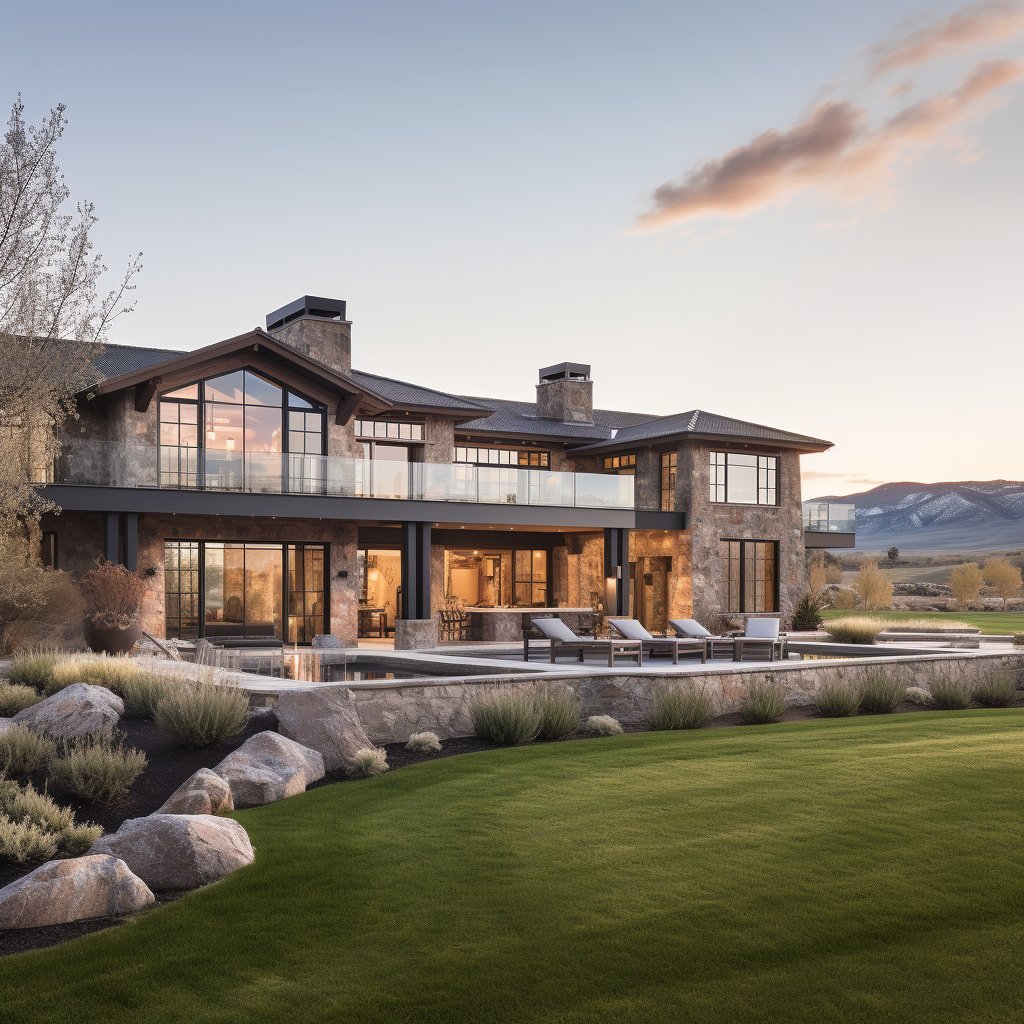
In Telluride, a modern home is usually better understood as newer construction rather than ultra-contemporary design. Even in newer residential areas, the town’s design guidelines favor buildings that remain compatible with local forms and materials.
East and West Telluride are described as predominantly newer construction, but the homes there are still expected to relate to the broader town. That often means rectangular forms, smaller building massing, front porches, painted horizontal lap siding, and simple gable roofs.
So if you are picturing glass boxes with no relationship to place, that is generally not what Telluride encourages. Newer homes here still tend to look local, just interpreted through more current building practices and layouts.
Why Buyers Choose Newer Homes
The biggest draw of newer homes is usually ease. Newer construction tends to offer a more straightforward path to current building standards, which can translate into better efficiency, more predictable maintenance, and smoother ownership over time.
That matters in Telluride’s climate. NOAA normals for the Telluride 4WNW station show 130.8 inches of annual snowfall, 20.37 inches of annual precipitation, and a mean annual temperature of 38.1 degrees Fahrenheit, so roof design, envelope performance, and winter durability are practical concerns.
For many buyers, especially second-home owners and remote owners, newer homes can feel simpler to manage. They may offer the local character you want without the same level of preservation-related constraint.
How Design Flexibility Works
Newer construction is more flexible, but not unlimited. Outside the historic district, contemporary design approaches are allowed, yet the town still expects homes to be compatible in mass, scale, proportions, shapes, and materials.
The guidelines also prefer new interpretations of traditional building types over direct imitation. In plain terms, Telluride wants newer homes to respect the town’s architectural language without pretending to be old.
That approach creates an important middle ground for buyers. You can often get updated functionality and a cleaner design while still owning a home that feels appropriate for Telluride.
Historic vs. Modern: Key Tradeoffs
If you are deciding between the two, it helps to focus on how you want to live rather than which style seems more impressive on paper. In Telluride, the better choice is usually the one that fits your priorities around character, maintenance, and ownership style.
| Consideration | Historic Home | Newer Home |
|---|---|---|
| Character | Strong connection to Telluride’s mining-era fabric | Local feel with a more current interpretation |
| Design changes | More oversight for exterior alterations | More flexibility, within town design standards |
| Maintenance | Often more specialized and hands-on | Usually more predictable |
| Efficiency | Can be improved, but often within preservation limits | Easier path to current code-era performance |
| Ownership style | Best for buyers who value authenticity | Best for buyers who prioritize convenience |
This is not a strict rule, and every property is different. But as a general framework, historic homes tend to reward buyers who want a place-specific experience, while newer homes tend to reward buyers who want easier functionality and lower-friction ownership.
Questions to Ask Yourself Before You Buy
Before you choose a historic or newer home, ask yourself a few practical questions. Your answers will usually point you in the right direction faster than style preferences alone.
How Much Maintenance Do You Want to Manage?
If you enjoy the idea of caring for an older property and taking a long view of stewardship, a historic home may feel rewarding. If you want fewer unknowns and a more predictable maintenance cycle, newer construction may be a better fit.
This question matters even more if you will not live in Telluride full-time. Long-distance owners often benefit from homes that are easier to maintain through changing weather and seasons.
How Important Is Original Character?
Some buyers want the texture of old Telluride in a very literal way. If original proportions, porch-oriented streetscapes, and a direct connection to the town’s past are high on your list, historic homes may carry more emotional value.
Others want a home that feels rooted in Telluride but works more like a current-day mountain property. In that case, a newer home may offer the better balance.
Do You Want Flexibility to Customize?
If you expect to renovate, expand, or make noticeable exterior changes, you should weigh the review process carefully. Historic homes can absolutely be improved, but the path is usually more structured.
Newer homes often give you more design freedom while still staying within local guidelines. That can be helpful if layout, function, and efficiency are just as important to you as architectural character.
How Do You Plan to Use the Home?
A full-time residence, a seasonal second home, and an investment-oriented property can each call for something different. Buyers who want simpler ownership from afar often lean newer, while buyers who see the home as a long-term personal legacy may lean historic.
The right answer depends on your goals, not on a universal ranking of one category over the other. In Telluride, both can be excellent options when matched to the right buyer.
A Smart Way to Narrow Your Search
If you are still unsure, try this simple filter. Choose historic if you are drawn most strongly to authenticity, architectural legacy, and the walkable feel of old Telluride, and you are comfortable with preservation review and a more hands-on ownership experience.
Choose newer if you value easier upkeep, stronger efficiency potential, and a layout built around more current expectations, while still wanting a home that fits Telluride’s visual character. That framing aligns well with the town’s preservation rules, design standards, and code environment.
In practice, many buyers benefit from touring both types before making a decision. What looks ideal online can feel very different once you experience the scale, layout, street setting, and maintenance reality in person.
If you are buying from out of state or planning a second-home purchase, a side-by-side evaluation can be especially helpful. Looking beyond finishes and focusing on ownership style usually leads to better long-term satisfaction.
When you are ready to compare historic and newer options in a practical, property-by-property way, Mike Weist can help you narrow the field, understand local review considerations, and evaluate what fits your goals in Telluride.
FAQs
What is considered a historic home in Telluride?
- In Telluride, historic homes are generally properties tied to the town’s older mining-era development pattern and located in areas where preservation standards and HARC review shape exterior changes.
What does modern mean for homes in Telluride?
- In Telluride, modern usually means newer construction with more current systems and efficiency potential, not radically contemporary architecture disconnected from the town’s character.
Do historic Telluride homes have more renovation rules?
- Yes. Many exterior changes to historic homes require review through HARC, and the town’s standards emphasize preserving original proportions, compatible details, and architectural integrity.
Are newer Telluride homes easier to maintain?
- In many cases, yes. Newer homes generally have a clearer path to current code-era performance and may offer more predictable maintenance, which can be especially helpful for second-home or remote owners.
Which type of Telluride home is better for a second-home buyer?
- It depends on your priorities. If you want simpler ownership and easier upkeep from afar, a newer home may fit better. If you value historic character and are comfortable with added oversight, a historic home may be the stronger match.